Braid vs Mono vs Fluorocarbon: Which Fishing Line Should You Use?
By Jimmy Hurff ·
TL;DR
Braid for thin, strong, no stretch line. Mono for cheap, easy, forgiving line. Fluoro for low visibility and sinking baits. Many anglers run braid to fluoro.
Walk down the line aisle and you get three choices: braid, monofilament, and fluorocarbon. Each one does a job the other two don't do as well. Pick the wrong one and you feel it in missed bites, break-offs, or a bird's nest on every cast.
Here is what each line is good at, and how to choose.
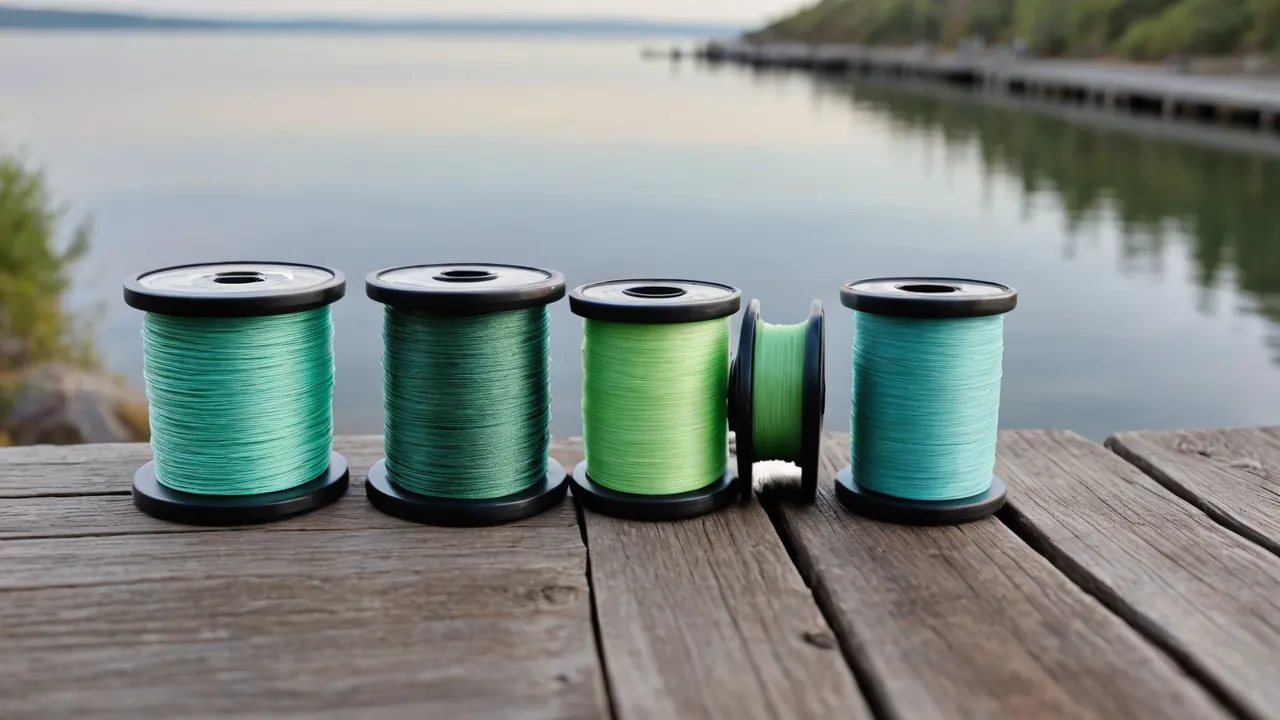
What is the difference?
Braid is several thin fibers woven together into one line. It is very thin for its strength and has almost no stretch.
Monofilament (mono) is a single strand of nylon. It stretches, it is easy to handle, and it is cheap.
Fluorocarbon (fluoro) is also a single strand, but made from fluorocarbon resin instead of nylon. It is harder to see underwater, sinks faster, and stretches less than mono.
Braid vs mono vs fluorocarbon at a glance
| Braid | Mono | Fluorocarbon | |
|---|---|---|---|
| Stretch | Almost none | Most | Less than mono |
| Diameter for its strength | Thinnest | Thicker | Thicker |
| Visibility underwater | Easy to see | In between | Hardest to see |
| Sinks or floats | Water repellent fibers | Not a fast sinker | Sinks faster than mono or braid |
| Abrasion resistance | Good, depends on the braid | Fair | Very good |
| Feel for bites | Most | Least | Good |
| Price | Higher | Lowest | Higher |
| Best for | Cover, topwater, long casts, main line with a leader | Topwater, treble hooks, beginners, budget | Clear water, finesse, bottom baits, leaders |
The fluorocarbon claims come from Seaguar's fluorocarbon FAQ. Seaguar invented fluorocarbon fishing line, and it says fluoro is virtually invisible, sinks faster than mono or braid, is very abrasion resistant, and stretches less than mono. It also lists the refractive index of water at 1.33, fluorocarbon at 1.42, and nylon at 1.62. The closer a line is to water, the harder it is to see.
Braid: thin, strong, and no stretch
Braid's big advantage is diameter. Look at the numbers on two popular lines:
| Line | Test | Diameter |
|---|---|---|
| Sufix 832 braid | 20 lb | 0.009 in |
| Sufix 832 braid | 30 lb | 0.011 in |
| Seaguar InvizX fluorocarbon | 10 lb | 0.010 in |
| Seaguar InvizX fluorocarbon | 20 lb | 0.016 in |
Braid diameters are from the Sufix 832 product page and fluoro diameters from the Seaguar InvizX product page. So 20 lb braid is thinner than 10 lb fluoro. That means more line on the spool, longer casts, and a lot more pulling power for the same size reel.
Sufix says 832 is built from 8 fibers (7 HMPE fibers plus 1 GORE Performance Fiber) with 32 weaves per inch, and that the HMPE fibers are water repellent.
No stretch means you feel everything, and your hookset gets to the fish right away, even at long range. It also means there is no cushion. Pull too hard on a small hook and you can rip it out.
The downsides: braid is easy for fish to see, it can dig into itself on the spool, and knots need to be the right kind. Most people fix the visibility problem with a leader (more on that below).
Good for: fishing in heavy cover and grass, topwater frogs, long casts, and inshore saltwater as a main line with a leader.
If you want braid, our Sufix 832 review, PowerPro Super 8 Slick V2 review, and best braided line roundup cover the main options. You can find Sufix 832 on Amazon.
Mono: cheap, easy, and forgiving
Mono is the line most of us started on, and it still has a place. It is the easiest line to tie and handle, it costs the least, and its stretch works like a shock absorber.
That stretch helps with treble hook baits like crankbaits and topwater plugs, where a little give keeps the hooks from pulling out. It also helps a new angler who sets the hook like they are starting a lawn mower. :-)
The downsides: more stretch means less feel and a softer hookset at long range. Seaguar also says fluorocarbon lasts longer than nylon mono, so plan to re-spool mono more often.
Berkley lists Trilene XL in 2 lb to 30 lb tests and calls it smooth casting and resistant to twists and kinks. On November 25, 2026, Berkley's site had it from $5.99 to $79.99 depending on test and spool size, with a 300 yd spool of 10 lb at $10.99.
Good for: beginners, budget setups, spinning reels with light lures, topwater, and crankbaits.
See our Berkley Trilene XL review, or find Trilene XL on Amazon.
Fluorocarbon: low visibility and it sinks
Fluoro is the line for clear water and line-shy fish. It is harder to see than mono, it sinks, and it holds up well against rocks, docks, and shell.
Sinking line helps baits that work on or near the bottom, like a drop shot, a Texas rig, or a jig. It also keeps more of the line under the surface on windy days.
Seaguar says InvizX is a 100% fluorocarbon main line with very low memory, which makes it soft, supple, and more castable. On November 25, 2026, Seaguar's site had 200 yd spools from $30.00 (4 lb to 10 lb) up to $46.50 (25 lb). Fluoro also absorbs very little water, according to Seaguar, which is why it stays soft in cold water.
The downsides: it costs more than mono, and heavy fluoro can be stiff and springy on a spinning reel. Wet your knots before you cinch them down.
Good for: clear water, finesse fishing, bottom baits, and leaders.
See our Seaguar InvizX review, or find Seaguar InvizX on Amazon.
What about braid with a fluorocarbon leader?
This is what a lot of anglers end up running, especially in salt water. You get braid's thin diameter, long casts, and feel on the main line, then a few feet of fluorocarbon at the end so the fish does not see the braid and you get some abrasion resistance near the bait.
Seaguar recommends exactly this: braid with a short fluorocarbon leader. Tie them together with a braid to leader knot such as a double uni or FG knot, and practice it at home before you need it on the water.
Which line for which fishing?
| How you fish | A good place to start |
|---|---|
| Topwater frogs in heavy grass | Braid, no leader |
| Walking baits and poppers | Braid with a mono or fluoro leader, or straight mono |
| Crankbaits | Fluorocarbon or mono |
| Texas rigs and jigs | Fluorocarbon, or braid in heavy cover |
| Drop shot and finesse in clear water | Braid with a fluoro leader, or straight fluoro |
| Inshore salt water (redfish, trout, snook) | Braid with a fluoro leader |
| Kids and beginners | Mono |
| Live bait under a float | Mono, or braid with a fluoro leader |
None of this is a hard rule. If you are just getting started, spool mono on one rod and braid with a fluoro leader on another and see what you like. Our Z-Man Houdini ShrimpZ vs Redfish ToadZ comparison is a good place to see what goes on the end of an inshore braid and leader setup.
If you fish from a kayak, our sister site BestKayakStuff covers the boat side.
FAQ
Is braid or fluorocarbon better?
Neither is better at everything. Braid is thinner, stronger for its size, and has almost no stretch. Fluorocarbon is harder for fish to see, sinks faster, and stands up to abrasion. That is why so many anglers use both: braid main line with a fluoro leader.
Does fluorocarbon stretch?
Yes, but less than mono. Seaguar says fluorocarbon lines and leaders stretch, but not as much as mono, and that main line stretches more than leader material.
Can I use mono as a leader on braid?
Yes. Mono works as a leader, especially for topwater and treble hook baits where a little stretch helps. Fluoro is the usual pick when you want low visibility or more abrasion resistance.
Is fluorocarbon invisible to fish?
No. Seaguar itself says fluorocarbon is virtually invisible, not completely invisible. It refracts light closer to water than nylon does, so it is harder to see.
How often should I change my fishing line?
It depends on how much you fish and how often you break off or cut back. Check the last few feet every trip for nicks and rough spots and cut it back. Seaguar says fluorocarbon lasts longer than nylon mono, so mono usually needs re-spooling sooner.
Disclosure: BestFishingStuff participates in the Amazon Associates program and other affiliate programs. Some links above are affiliate links. We may earn a small commission at no extra cost to you.
Verdict
Braid vs Mono vs Fluorocarbon: Which Fishing Line Should You Use? is worth your money if it matches the use case above - see the full breakdown for who should (and shouldn't) buy.
Frequently asked questions
- Is braid or fluorocarbon better?
- Neither is better at everything. Braid is thinner, stronger for its size, and has almost no stretch. Fluorocarbon is harder for fish to see, sinks faster, and stands up to abrasion. That is why so many anglers use both: braid main line with a fluoro leader.
- Does fluorocarbon stretch?
- Yes, but less than mono. Seaguar says fluorocarbon lines and leaders stretch, but not as much as mono, and that main line stretches more than leader material.
- Can I use mono as a leader on braid?
- Yes. Mono works as a leader, especially for topwater and treble hook baits where a little stretch helps. Fluoro is the usual pick when you want low visibility or more abrasion resistance.
- Is fluorocarbon invisible to fish?
- No. Seaguar itself says fluorocarbon is virtually invisible, not completely invisible. It refracts light closer to water than nylon does, so it is harder to see.
- How often should I change my fishing line?
- It depends on how much you fish and how often you break off or cut back. Check the last few feet every trip for nicks and rough spots and cut it back. Seaguar says fluorocarbon lasts longer than nylon mono, so mono usually needs re-spooling sooner.